Iron - General Properties, Sources Of Iron, How Iron Is Obtained, How We Use Iron, Biochemical Applications
atomic chemical isotopes weights
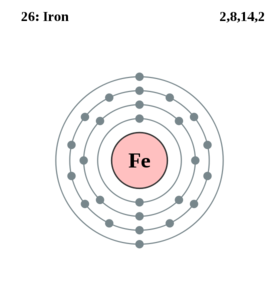
Iron is a metallic chemical element of atomic number 26. Its symbol is Fe, atomic weight is 55.847, specific gravity is 7.874, melting point is 2,795°F (1,535°C), and boiling point is 4,982°F (2,750°C).
Iron is one of the transition metals, occurring in group 8 of the periodic table. Four naturally occurring isotopes exist with atomic weights of 54 (5.8%), 56 (91.7%), 57 (2.2%), and 58 (0.3%). In addition, six radioactive isotopes have been prepared, with atomic weights of 52, 53, 55, 59, 60, and 61. The element was originally known by its Latin name ferrum, from which its chemical symbol is derived.
Additional Topics
Iron is a silver-white or gray metal that is malleable and ductile. In a pure form, it is relatively soft and slightly magnetic. When hardened, it becomes much more magnetic. Iron is the most widely used of all metals. Prior to its use, however, it must be treated in some way to improve its properties or it must be combined with one or more other elements to form an alloy. By far the most common a…
Iron is the fourth most abundant element in the earth's crust and the second most abundant metal, after aluminum. It makes up about 6.2% of the crust by weight. In addition, iron is thought to be the primary constituent of the earth's core as well as of siderite meteorites. Soil samples taken from the Moon indicate that about 0.5% of lunar soil consists of iron. …
A major change in the technique for producing iron from its ores occurred in about 1773. As trees (and therefore the charcoal made from them) grew increasingly scarce in Great Britain, the English inventor Abraham Darby (1678?-1717) discovered a method for making coke from soft coal. Since coal was abundant in the British Isles, Darby's technique insured a constant supply of coal for the co…
Alloyed with other metals, iron is the most widely used of all metallic elements. The way in which it is alloyed determines the uses to which the final product is put. Steel, for example, is a general term used to describe iron alloyed with carbon and, in some cases, with other elements. The American Iron and Steel Institute recognizes 27 standard types of steel. Three of these are designated as c…
From a commercial standpoint, probably the most important chemical reaction of iron is its tendency to oxidize. When alloys of iron (such as the steels) are used in construction, a major concern is that they tend to react with oxygen in the air, forming a coating or iron oxide, or rust. The rusting process is actually a somewhat complex process in which both oxygen and water are involved. If one o…
Citing this material
Please include a link to this page if you have found this material useful for research or writing a related article. Content on this website is from high-quality, licensed material originally published in print form. You can always be sure you're reading unbiased, factual, and accurate information.
Highlight the text below, right-click, and select “copy”. Paste the link into your website, email, or any other HTML document.
User Comments
about 1 year ago
hi